


Introduction
If you have spent any time browsing skincare shelves or scrolling through K-beauty hauls, you have almost certainly seen the word “Cica” splashed across packaging. It is one of those ingredients that quietly became unavoidable, yet many people still reach for a Cica product without truly understanding what it is, what it actually does inside the skin, and whether the version they bought is even potent enough to work.
This guide covers everything — from the plant it comes from, to the active molecules responsible for its benefits, to how to read an ingredient label so you know if your Cica product is genuinely effective.
What Is Cica in Skincare?
Cica is simply a shorthand name for Centella Asiatica, a small, leafy, perennial herb that grows in the moist, tropical wetlands of Asia, Africa, and parts of the Pacific. You will also see it sold under the names Gotu Kola, Tiger Grass, Indian Pennywort, and Asiatic Pennywort. The nickname “Cica” caught on largely through Korean beauty culture, where the ingredient became a cornerstone of sensitive skin formulations.
What many people do not realize is that Centella Asiatica has been used medicinally for over three thousand years. In traditional Ayurvedic medicine and traditional Chinese medicine, practitioners relied on it to support wound healing, reduce inflammation, improve circulation, and even support brain and digestive health. Its entry into Western medicine came in the nineteenth century, and modern dermatology has since validated several of those traditional uses with clinical research.
In skincare today, Cica extract appears in serums, creams, toners, balms, and even color-correcting products. But the term “Cica” on a label tells you less than you might think — which is why understanding the actual active compounds matters more than the marketing name alone.
The Active Compounds Inside Cica Extract
The reason Cica is not just another botanical buzzword comes down to its specific active molecules, known as triterpenoid saponins. These are the compounds that have been studied in clinical settings and shown to deliver measurable skin benefits. The four most important ones are:
- Madecassoside — The most clinically researched compound in Centella Asiatica. It reduces inflammation, supports wound healing, inhibits UV-induced melanin synthesis, and has been shown to promote collagen expression. At a concentration of 0.2%, it reduces redness, peeling, and itching in skin with atopic dermatitis and psoriasis.
- Asiaticoside — Helps stimulate collagen synthesis and supports the skin’s healing process, particularly in scar tissue maturation.
- Asiatic Acid — Functions as an antioxidant and contributes to skin repair and protection against environmental damage.
- Madecassic Acid — Works similarly to asiatic acid with strong antioxidant and anti-inflammatory activity.
Beyond these four, Cica extract also contains amino acids, fatty acids, flavonoids, phenolic acids, and beta-carotene — a combination that supports hydration, barrier function, and protection against oxidative stress simultaneously.
Cica Benefits for Skin — What the Research Actually Shows
Barrier Strengthening and Hydration

One of the most well-supported cica skin benefits is its ability to reinforce the skin barrier. The triterpenoid saponins and phytosterols in Centella Asiatica support the production of essential lipids that keep the barrier intact. When the skin barrier is compromised — through over-exfoliation, harsh actives, environmental damage, or conditions like eczema — transepidermal water loss increases, leading to tightness, sensitivity, and reactivity.
Human trials have shown that Centella-based formulations reduce transepidermal water loss and measurably improve skin hydration. A product containing Centella Asiatica extract combined with hyaluronic acid and glycerin demonstrated improved hydration in a study of twenty women. The combination of barrier lipid support from Cica and humectants from co-formulated ingredients creates a compounding effect on moisture retention.
Soothing Redness and Calming Inflammation
This is the cica benefit most people know, and it is the one with the strongest clinical backing. The triterpenoids in Centella — especially madecassoside — calm inflammation through multiple pathways, including modulation of TGF-β signaling and reduction of inflammatory mediators. The result, for people with sensitive, reactive, or redness-prone skin, is a visible reduction in flushing, irritation, and stinging.
It is particularly effective for skin that has become reactive due to overuse of retinoids or exfoliating acids. Because Cica does not strip or disrupt the skin, it can be layered with stronger actives to improve their tolerability without reducing their effectiveness.
Wound Healing and Scar Support
Centella Asiatica’s wound-healing properties were what first attracted scientific attention in the late 1990s. Research showed that both madecassoside and asiaticoside helped improve burn wound healing in topical and oral applications. The mechanism involves stimulating fibroblast activity, promoting type I collagen synthesis, decreasing the inflammatory reaction in healing tissue, and reducing myofibroblast production — all of which contribute to cleaner, flatter scar formation.
In a small 2018 human study, Centella Asiatica reduced pigmentation on skin-graft scars. In clinical dermatology, 1% madecassoside cream has been used in France as a pharmacy-grade scar treatment. For everyday cosmetic use, this translates to a supportive role in fading post-acne marks, calming active blemishes, and reducing the visible aftermath of skin trauma.
Anti-Aging Support
Cica’s anti-aging role is more supportive than transformative, but it is real. It works on two fronts. First, its antioxidant compounds neutralize free radicals generated by UV exposure and environmental pollution — both of which accelerate collagen breakdown and lead to fine lines, uneven tone, and loss of elasticity. Second, the collagen-stimulating activity of its triterpenoids contributes to firmer, smoother skin over time.
A six-month study of twenty women with sun-damaged skin found that a formula combining vitamin C with madecassoside produced significant improvements in deep and superficial wrinkles, skin firmness, suppleness, roughness, and hydration. Cica alone would not produce results at that level — but as part of a well-formulated anti-aging routine, it contributes meaningfully.
Cica Uses for Skin by Skin Type
Cica is compatible with virtually every skin type, but the intensity of benefit varies depending on what your skin is dealing with.
| Skin Type | Primary Cica Benefit | Best Product Format |
|---|---|---|
| Sensitive / Reactive | Redness reduction, barrier repair | Fragrance-free serum or cream |
| Dry | Hydration, lipid barrier support | Rich balm or moisturizer |
| Acne-Prone | Calms inflammation, fades post-acne marks | Lightweight gel or serum |
| Oily / Combination | Barrier support without heaviness | Gel-texture serum |
| Mature / Aging | Collagen support, antioxidant protection | Serum layered under moisturizer |
| Post-Procedure | Accelerated healing, reduced redness | Fragrance-free balm or cream |
Cica vs. Centella Asiatica — Are They the Same Thing?
They come from the same plant, but they are not always the same formulation. “Centella Asiatica extract” on an ingredient label refers to a full plant extract, which contains all the active compounds but at unspecified concentrations. Products explicitly labeled as “Cica” or “Madecassoside” often contain isolated, standardized concentrations of the most potent actives — particularly madecassoside — which allows for more targeted and predictable results.
For targeted barrier repair or scar support, a product with isolated madecassoside will typically perform more reliably. For general soothing, hydration, and long-term skin health maintenance, a broad Centella Asiatica extract in a well-formulated product works well.
How to Read a Cica Ingredient Label

This is a section most articles skip, and it is arguably the most practical information you need before purchasing a Cica product.
What to look for:
- “Madecassoside” or “Asiaticoside” listed explicitly — these isolated actives are more potent than a generic extract
- “Centella Asiatica Extract” positioned within the first five ingredients on the label — ingredient lists are ordered by concentration, so position signals potency
- A percentage disclosure, if available — even 0.1% madecassoside is functional, but 0.2% and above is where significant redness and barrier benefits have been clinically demonstrated
- Supporting ingredients like ceramides, panthenol, niacinamide, or hyaluronic acid — these amplify Cica’s barrier and hydration effects
What to avoid:
- Products where “Centella Asiatica” appears near the bottom of a long ingredient list — there is likely too little present to make a meaningful difference
- Formulas with synthetic fragrance or alcohol if your skin is already compromised — these can trigger irritation that offsets Cica’s calming effects
- Products that use “Cica” only in the marketing name without listing any Centella-derived ingredient in the actual formula
How to Use Cica in Your Skincare Routine
Cica is one of the most routine-friendly ingredients in skincare because it layers well with nearly everything. Unlike exfoliating acids or vitamin C, it introduces no conflict with other actives and requires no adjustment period.
For a morning routine, apply a Cica serum after cleansing and before your moisturizer and SPF. It helps buffer your skin against environmental stressors throughout the day and supports barrier function so your skin ends the day in better condition than it started.
For an evening routine, Cica is an excellent step after retinoids or acids. Apply it directly after your active step to calm any reactive response and support overnight repair. It does not interfere with the efficacy of those actives — it simply makes them more comfortable to use, which means you are more likely to stay consistent with them.
Most dermatologists recommend using Cica morning and night, and products containing at least 5% Centella Asiatica extract have been shown to enhance skin moisture levels. For best results, maintain consistent daily use over several weeks rather than treating it as a spot-use rescue ingredient only.
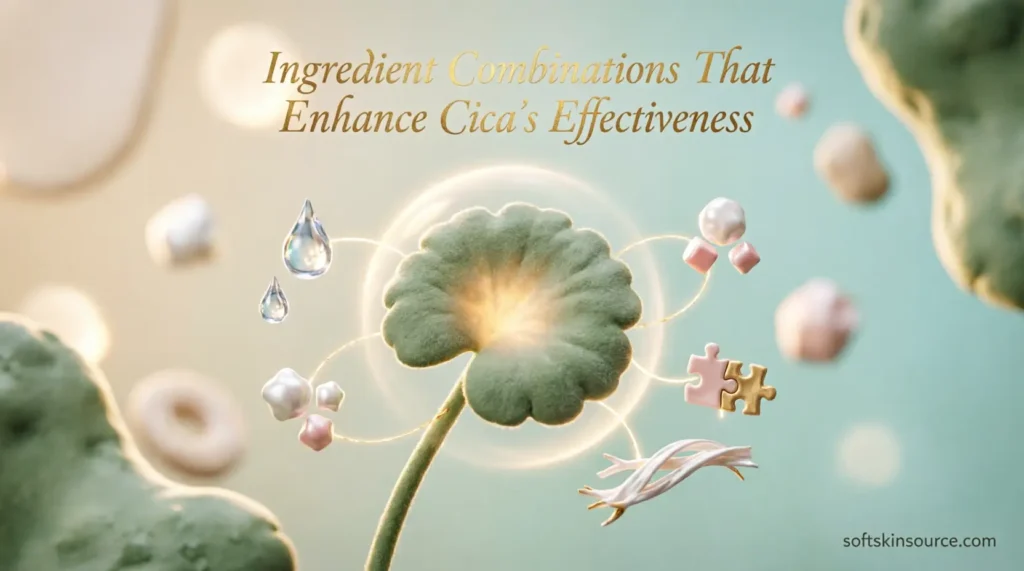
Ingredient Combinations That Enhance Cica’s Effectiveness
Cica with Vitamin C
This pairing is backed by a published six-month clinical study. Vitamin C accelerates collagen production and brightens skin tone, while Cica’s madecassoside strengthens barrier function and modulates the inflammatory signals that can undermine collagen stability. Together, the combination improves wrinkle depth, skin firmness, elasticity, and hydration more significantly than either ingredient used in isolation.
Cica with Ceramides
Ceramides are the primary lipid component of the skin barrier. Pairing them with Cica creates a compounding barrier-repair effect — Cica stimulates the production of barrier lipids from within the skin cells, while ceramides directly replenish the lipid matrix from the outside. This is the most effective combination for severely compromised or eczema-prone skin.
Cica with Niacinamide
Niacinamide reduces pore appearance, controls excess sebum, and fades hyperpigmentation. When combined with Cica, it also becomes gentler on sensitive skin — Cica tempers niacinamide’s occasional flushing response and the two together provide a strong anti-redness, barrier-supportive routine.
Cica with Aloe Vera
Both ingredients are soothing and anti-inflammatory, and their combination creates a synergistic effect particularly useful for acne-prone skin. Aloe vera helps control surface bacteria, while Cica accelerates the healing of active lesions and reduces post-inflammatory marks. This pairing is well-suited to lightweight, gel-based formulations.
Cica with Glycolic Acid
Glycolic acid exfoliates the surface layer of skin to improve texture, while Cica counteracts the temporary irritation and barrier disruption that exfoliants can cause. The two are best used at different steps — glycolic acid first, then Cica as a calming follow-up — rather than in the same formula.
Potential Side Effects of Cica
Cica is considered one of the safest active botanical ingredients in skincare. Reported side effects are rare and most commonly occur when products containing Centella Asiatica also include potential irritants like synthetic fragrances or alcohols in the same formula.
Possible topical side effects include:
- Contact dermatitis in individuals with specific plant allergies
- Mild itching or burning, usually from incompatible co-ingredients rather than Cica itself
- Increased sun sensitivity with oral supplementation
With oral Cica supplements, nausea, bloating, and drowsiness have been reported in some individuals. More serious signals — jaundice, abdominal pain, mild fever, or clay-colored stools — require immediate medical attention and discontinuation.
For most people, a patch test on the inner forearm before full-face application is the appropriate precaution, particularly if you have a known history of contact allergies or very reactive skin.
Frequently Asked Questions
Is Cica the same as Centella Asiatica?
Yes and no. Cica is the informal name for Centella Asiatica, so they refer to the same plant. However, products marketed specifically as “Cica” often contain isolated, concentrated forms of the plant’s active compounds — like madecassoside or asiaticoside — rather than a full plant extract. These isolated forms tend to be more potent and predictable in their results.
Can Cica be used every day?
Yes. Cica is gentle enough for twice-daily use and is one of the few active ingredients with no required adjustment period. Daily, consistent use over several weeks produces the most noticeable improvements in barrier strength, redness, and skin smoothness.
Is Cica good for acne-prone skin?
Cica is beneficial for acne-prone skin, though it does not treat acne the way dedicated actives like benzoyl peroxide or salicylic acid do. Its value for acne-prone skin lies in calming active inflammation, supporting the healing of lesions without scarring, and fading post-acne hyperpigmentation. A 2018 in-vitro study found that madecassoside reduced acne-linked inflammation and improved hydration in human skin cells.
Can you use Cica with retinol?
Absolutely. This is one of the most recommended pairings in modern skincare. Cica improves the tolerability of retinol by calming the skin barrier disruption and dryness that retinol commonly causes, without reducing retinol’s effectiveness. Apply retinol first, allow it to absorb, then apply your Cica product on top.
How long does it take to see results from Cica?
Soothing and redness-calming effects can be noticed after just a few applications. Barrier repair and hydration improvements typically become apparent within two to four weeks of consistent use. Collagen-related benefits — like improved firmness and reduced fine lines — require longer-term use, with some clinical studies showing significant improvements after six months.
What should I look for on a label to ensure my Cica product actually works?
Look for “madecassoside,” “asiaticoside,” or “Centella Asiatica extract” listed within the first five ingredients. Transparent percentage disclosures are a bonus. Avoid products that only use “Cica” in the product name without listing any Centella-derived compound in the actual ingredient list.
Is Cica safe for use after skincare treatments like chemical peels?
Yes. Cica is frequently recommended for post-procedure skincare precisely because of its wound-healing and barrier-repair properties. It helps reduce post-treatment redness, supports faster recovery, and reduces the risk of post-inflammatory hyperpigmentation. Always follow your practitioner’s specific aftercare instructions, but Cica is generally considered a suitable and beneficial post-procedure ingredient.
Conclusion
There is something worth saying plainly about Cica that most marketing would rather leave vague: it is not magic, and it is not meant to be. What it is, is a genuinely well-researched botanical ingredient with a rare combination of properties — soothing, healing, barrier-strengthening, and collagen-supportive — that most synthetic alternatives cannot replicate with the same tolerability. The challenge has never been with the ingredient itself. It has always been with poorly formulated products that use the name without the substance. Now that you know what to look for on a label, what each active compound actually does, and how to build it into a routine intelligently, you are in a position to get real results from it — not just from the category, but from the specific product you choose.
