

Introduction
If your face turns into a grease sheet by midday regardless of what you put on it, you already know the frustration. You strip your skin with harsh cleansers, pile on mattifying products, and still end up shiny before noon. The problem is not your skin — it is the approach. Korean skincare for oily skin operates on an entirely different philosophy than most Western routines, and once you understand that philosophy, managing excess oil stops feeling like a daily battle.
This guide covers everything: why K-beauty works so well for oily skin types, the ingredients that actually regulate sebum, the full routine step by step, the best Koreanskincare products for oily skin across every category, and the mistakes that make oily skin worse even when you are doing everything else right.
Why Korean Skincare Works So Well for Oily Skin
Most Western skincare approaches treat oily skin like a problem to be eliminated. The typical response is to dry it out — astringent toners, alcohol-heavy products, mattifying layers that strip the skin barrier down to nothing. The skin responds predictably: it produces even more oil to compensate for the moisture it just lost.
Korean skin care for oily skin takes the opposite approach. The philosophy centers on balance, not suppression. Instead of waging war on your sebaceous glands, a Korean routine aims to give the skin what it actually needs — controlled hydration, gentle exfoliation, and a healthy moisture barrier — so the glands no longer feel the need to overproduce.
There are a few structural reasons why this works particularly well for oily skin types:
- Lightweight, water-based formulas hydrate without adding grease or clogging pores
- Layering multiple thin products allows for customized treatment targeting pores, sebum, and breakouts simultaneously
- Ingredients like niacinamide and BHA address oil control at the root cause, not just on the surface
- The routine emphasizes barrier repair, which is often damaged in oily skin from over-cleansing
- K-beauty’s emphasis on gentle, consistent care reduces the rebound oil production that harsh routines cause
The result is skin that is balanced rather than swinging between dry and oily — and that balance is what makes the best Korean skincare for oily skin genuinely transformative.
Understanding Why Your Skin Produces Excess Oil
Before building a routine, it helps to understand what is actually happening under the surface. Excess sebum production is driven by sebaceous glands, which are influenced by androgen hormones. These hormones exist in all skin types and can fluctuate due to genetics, stress, diet, humidity, and age. Some people are simply born with more active sebaceous glands — no amount of product will permanently switch them off, but the right routine can regulate their output significantly.
Other factors that increase oiliness that are often overlooked include:
- Over-cleansing or using cleansers with high pH that strip the skin’s acid mantle
- Skipping moisturizer, which triggers compensatory sebum production
- Using heavy occlusives that trap oil rather than regulate it
- High-glycemic diets and dairy, which research links to increased androgen activity
- Hot, humid climates that signal the skin to produce more oil
Understanding the triggers means you can address them strategically rather than just reacting with more mattifying products.
The Best Ingredients in Korean Skincare for Oily Skin
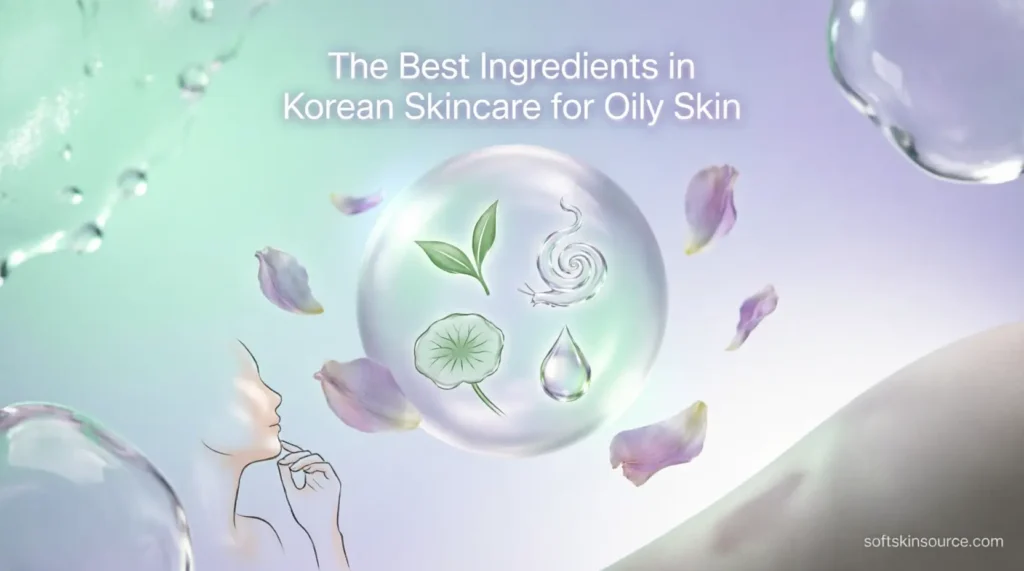
The best Korean skincare products for oily skin are not just labeled “for oily skin” — they contain specific actives that work on the sebum problem from different angles. Knowing your ingredients lets you build a smarter, more effective routine.
Niacinamide (Vitamin B3)
This is arguably the single most important ingredient in any Korean skin care routine for oily skin. Niacinamide regulates sebum production, minimizes the visible appearance of pores, reduces post-breakout redness, and brightens uneven skin tone — all in one ingredient. It is also remarkably well-tolerated, making it suitable even for those with sensitive oily skin. Most effective between 2% and 10% concentration.
Salicylic Acid (BHA)
Beta hydroxy acid is oil-soluble, meaning it can penetrate through the sebum sitting inside your pores rather than just working on the surface. It dissolves the bonds between dead skin cells, clears congestion, and reduces both blackheads and active breakouts. Consistent, gentle use two to three times per week is far more effective than occasional high-dose exfoliation.
Centella Asiatica (Cica)
Oily skin and inflammation often go hand in hand — active sebum production, frequent breakouts, and irritation from trying too many products create a cycle of redness and sensitivity. Centella asiatica is rich in antioxidants and supports barrier repair while calming inflammation. It helps heal existing breakouts and prevents new ones from forming, without adding any heaviness.
Green Tea Extract
Green tea has legitimate science behind it for oily skin. Its polyphenol compounds reduce sebum production, fight inflammatory acne, and provide antioxidant protection against environmental damage. It also has a light texture that does not compete with oil-control formulas.
Hyaluronic Acid
This one surprises people. Hyaluronic acid is a humectant that draws moisture into the skin from the environment, delivering hydration without any greasiness whatsoever. Oily skin still needs water-based hydration — HA provides exactly that. Formulas with multi-weight hyaluronic acid (combining different molecular sizes) hydrate at multiple skin depths simultaneously.
Zinc and Tea Tree
Both zinc oxide and tea tree extract regulate sebum production and have antimicrobial properties that reduce acne-causing bacteria. Tea tree in particular helps control excess oil without the drying effect of stronger actives.
A Quick Ingredient Reference
| Ingredient | Primary Benefit | Best Used In |
|---|---|---|
| Niacinamide | Sebum regulation, pore minimizing | Serum, moisturizer |
| Salicylic Acid (BHA) | Deep pore cleansing, exfoliation | Toner, serum, cleanser |
| Centella Asiatica | Barrier repair, anti-inflammatory | Toner, serum, moisturizer |
| Green Tea Extract | Oil control, antioxidant protection | Toner, serum |
| Hyaluronic Acid | Water-based hydration | Essence, moisturizer |
| Zinc | Sebum regulation, antibacterial | Sunscreen, moisturizer |
The Full Korean Skincare Routine for Oily Skin, Step by Step
This is the framework. You do not need every single step every day — a simplified morning and more complete evening routine is a realistic approach for most people.
Step 1: Oil Cleanser (PM Only)

This confuses people. Why use oil on oily skin? Because like dissolves like. An oil-based cleanser is the most effective way to dissolve sunscreen, makeup, and the oxidized sebum sitting on the surface of your skin. Non-comedogenic cleansing oils formulated for oily skin — like ANUA Heartleaf Pore Control Cleansing Oil — remove these oil-based impurities without leaving any residue and without stripping the moisture barrier.
Massage onto dry skin, emulsify with a few drops of water, and rinse. Never skip this step if you wear sunscreen, which you should be doing daily.
Step 2: Water-Based Cleanser (AM and PM)
Your second cleanser removes the water-soluble impurities — sweat, environmental pollutants, and anything your oil cleanser did not catch. For oily skin, look for low-pH gel or foam cleansers that clean effectively while respecting the skin’s natural acid mantle. COSRX Low pH Good Morning Gel Cleanser is one of the most recommended for this reason — it works without disrupting the 4.5–5.5 pH range that keeps oily skin balanced.
In the morning, you can skip the oil cleanser entirely and just use your water-based cleanser.
Step 3: Exfoliator (2 to 3 Times Per Week)
Korean skincare philosophy favors frequent, gentle exfoliation over aggressive weekly treatments. BHA-based exfoliating toners are the standard for oily skin because salicylic acid penetrates pores rather than just buffing the surface. The COSRX AHA/BHA Clarifying Treatment Toner and ANUA BHA 2% Gentle Exfoliating Toner are both well-suited for regular use.
Do not over-exfoliate. More than three times per week with a BHA can compromise the moisture barrier and trigger rebound oiliness.
Step 4: Toner
Korean toners have nothing in common with Western astringent toners. They are lightweight hydrating treatments that balance pH after cleansing and prepare the skin to absorb everything that follows. For oily skin, look for toners with pore-refining and oil-balancing properties. Ingredients like niacinamide, centella asiatica, and green tea are ideal here. Apply by patting gently rather than wiping — this technique, layering two to three thin applications, improves absorption significantly.
Step 5: Essence
Essences are a K-beauty staple that most Western routines skip entirely. They are lighter than serums but packed with active ingredients — fermented extracts, hyaluronic acid, and skin-replenishing compounds that prime the skin for the treatment steps that follow. For oily skin, look for watery, fast-absorbing essences. COSRX Advanced Snail 96 Mucin Power Essence is one of the most popular because of its lightweight texture and barrier-strengthening properties.
Step 6: Serum or Ampoule
This is your targeted treatment step. For oily skin, niacinamide serums and BHA-containing ampoules do the heaviest lifting. The Beauty of Joseon Glow Serum with Propolis and Niacinamide is a consistently recommended product for its ability to regulate oil while brightening post-acne marks.
If you have multiple concerns — oiliness plus hyperpigmentation, or oiliness plus sensitivity — you can alternate serums on different nights rather than layering too many actives at once.
Step 7: Sheet Mask (Optional, 2 Times Per Week)
Sheet masks deliver a concentrated dose of actives in a format that maximizes absorption. For oily skin, look for hydrating and pore-clarifying masks with centella, green tea, or niacinamide. Avoid heavy cream-based sleeping masks designed for dry skin.
Step 8: Moisturizer
This is the step most oily-skinned people skip or get wrong. Skipping moisturizer is one of the main reasons oily skin stays oily — the skin interprets dryness as a signal to produce more sebum. The best Korean moisturizer for oily skin is almost always a gel-cream or water-gel format. These provide genuine hydration using water-based systems rather than heavy occlusives that sit on top of the skin.
Look for formulas with niacinamide, centella asiatica, and hyaluronic acid. Avoid petrolatum-heavy or shea-butter-heavy creams if your skin is consistently oily throughout the day. Isntree Hyaluronic Acid Aqua Gel Cream and SKIN1004 Madagascar Centella Cream are both highly rated options in a lightweight format.
Step 9: Eye Cream
A step that is easy to skip but worth including if you are building a complete routine. The skin around the eye area is thinner and behaves differently from the rest of the face — a lightweight eye cream prevents dryness and fine lines in this area without contributing to oiliness elsewhere.
Step 10: Sunscreen (AM Only)
Korean sunscreens are among the most advanced in the world, using UV filters not yet approved in the US market that offer superior protection in genuinely lightweight formulas. For oily skin, look for a matte-finish SPF 50+ PA++++ sunscreen. This is not optional. UV exposure worsens post-acne hyperpigmentation, enlarges pores over time, and accelerates the skin aging that oily skin types are often hoping to avoid.
Best Korean Skincare Products for Oily Skin by Category
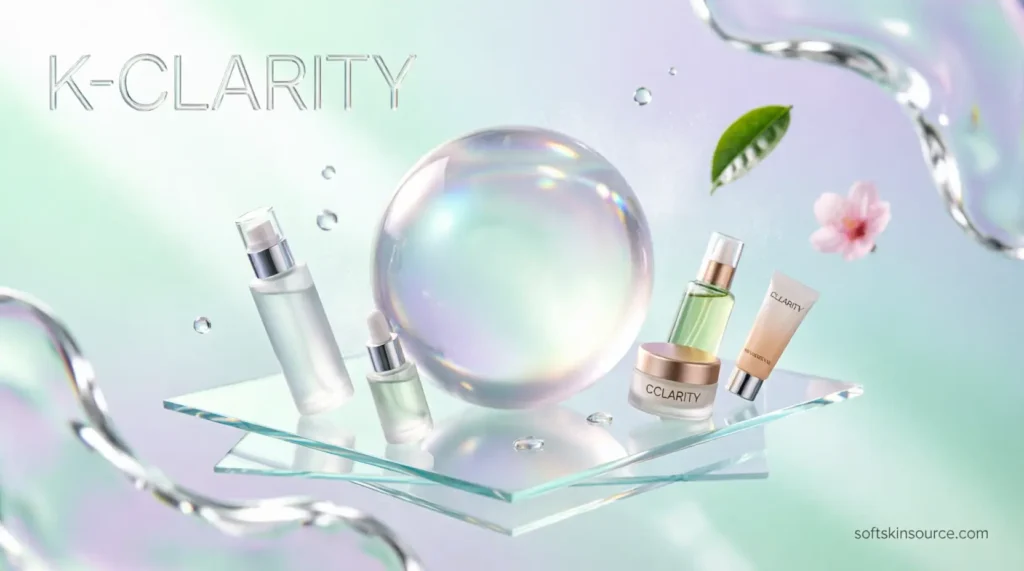
Best Cleansers
COSRX Low pH Good Morning Gel Cleanser is the most consistent recommendation across the K-beauty community for oily skin — affordable, effective, and gentle enough for daily use. ANUA Heartleaf Pore Control Cleansing Oil covers the oil-cleansing step specifically formulated to be non-comedogenic.
Best Toners for Oily Skin
Some By Mi AHA BHA PHA 30 Days Miracle Toner combines multiple exfoliating acids in one step, well-suited for oily and acne-prone skin. ANUA Heartleaf 77% Soothing Toner is the go-to for oily skin that also trends sensitive, delivering lightweight hydration with oil-balancing properties.
Best Serums
Beauty of Joseon Glow Serum (Propolis + Niacinamide) addresses oil, brightness, and barrier repair in one product. COSRX Advanced Snail 96 Mucin Power Essence doubles as both essence and serum for a simplified routine.
Best Korean Moisturizer for Oily Skin
Isntree Hyaluronic Acid Aqua Gel Cream delivers water-based hydration in a texture that genuinely feels weightless on oily skin. Klairs Fundamental Water Gel Cream was specifically designed for oily and combination skin, setting to a smooth non-sticky finish. Benton Aloe Propolis Gel is ideal for very oily skin or humid climates where even gel creams feel excessive — it is essentially weightless while still supporting the moisture barrier.
Best Sunscreens
Korean SPF formulas for oily skin are significantly ahead of Western options. Look for matte-finish formulations with SPF 50+ PA++++, no white cast, and skincare ingredients built into the formula.
Morning vs. Evening Routine: What Changes
| Step | Morning Routine | Evening Routine |
|---|---|---|
| Cleanser | Water-based cleanser only | Oil cleanser + water-based cleanser |
| Exfoliation | Skip | BHA toner, 2-3x per week |
| Toner | Yes | Yes |
| Essence | Yes | Yes |
| Serum | Vitamin C or niacinamide | Niacinamide or BHA ampoule |
| Moisturizer | Lightweight gel-cream | Same or slightly richer |
| Sunscreen | SPF 50+ PA++++ | Skip |
| Sheet Mask | Skip | 2x per week if desired |
Oily Skin Mistakes That Make Things Worse
Even people following a Korean routine make these errors:
Washing the face more than twice a day strips the skin’s acid mantle and causes rebound oil production within hours. More cleansing does not equal less oil — the opposite is true.
Using alcohol-based toners or astringents triggers the same compensatory sebum response. They produce a temporary matte effect followed by significantly more oil several hours later.
Skipping moisturizer because skin feels greasy leaves the moisture barrier vulnerable, which worsens both oiliness and breakouts over time.
Layering too many active ingredients simultaneously — AHA, BHA, retinol, vitamin C, and niacinamide all at once — causes irritation that inflames the skin and worsens oil production and breakouts.
Changing the routine too frequently. Korean skincare is built on consistency. Most ingredients need four to six weeks of regular use before visible results appear.
Korean Skincare for Oily Skin vs. Western Approaches
| Factor | Korean Skincare | Western Skincare |
|---|---|---|
| Core philosophy | Balance and prevention | Treatment and correction |
| Approach to oil | Regulate through hydration | Eliminate and dry out |
| Texture preference | Water-based, lightweight layers | Often single heavier products |
| Exfoliation method | Frequent, gentle (BHA toners) | Less frequent, more aggressive |
| Barrier focus | Central to every routine | Often secondary |
| Sunscreen integration | Daily, lightweight SPF | Less consistent daily use |
| Long-term outcome | Balanced, slower aging | Can worsen oil rebound |
Building a Simple Routine If You Are New to K-Beauty
Not everyone needs ten steps from day one. A stripped-back starting point that still delivers results for oily skin:
Morning: Low pH water-based cleanser, niacinamide serum, lightweight gel moisturizer, SPF 50+
Evening: Oil cleanser, water-based cleanser, BHA toner three times per week, niacinamide serum, gel moisturizer
This covers the essential bases — double cleansing, chemical exfoliation, oil regulation through niacinamide, proper hydration, and sun protection. From here, you can layer in an essence, targeted ampoule, or sheet mask as your skin adjusts and your routine becomes habitual.
Seasonal Adjustments for Oily Skin

An aspect competitors consistently overlook: oily skin behaves differently across seasons, and your routine should adapt accordingly.
In summer and high-humidity climates, even lightweight gel creams can feel like too much. Switching to a pure aloe gel or essence-only moisturizer during the hottest months prevents the heavy, layered feeling that pushes people to skip steps entirely. Blotting papers become useful during the day without disrupting SPF.
In winter or dry climates, oily skin can become dehydrated — producing oil on the surface while being starved of water in the deeper layers. This is the time to add a hyaluronic acid essence and consider a slightly richer gel-cream. The sebum production does not necessarily decrease; the skin simply needs more water-based hydration to stay balanced.
Skin-Type Variations Within Oily Skin
Oily skin is not monolithic, and the best Korean skincare products for oily skin will vary depending on which subtype you are dealing with.
Oily and acne-prone skin benefits from routine BHA use, niacinamide, centella asiatica for post-breakout healing, and pimple patches for active spots. Avoid heavy essences with fermented ingredients if your skin reacts to high-concentration ferments.
Oily and sensitive skin needs more emphasis on barrier repair. Centella asiatica, ceramide-containing products, and fragrance-free formulas should take priority. Reduce the frequency of BHA use and opt for PHAs (polyhydroxy acids), which are gentler with similar pore-clearing benefits.
Oily and combination skin, where the T-zone is oily but cheeks are normal or even dry, responds well to zone-specific application — lighter products on cheeks, oil-control actives concentrated on the forehead and nose.
Frequently Asked Questions
Is Korean skincare actually good for oily skin? Yes — Korean skin care for oily skin is among the most effective approaches available because it targets the root causes of excess sebum rather than just masking the symptoms. The emphasis on balanced hydration, gentle exfoliation, and barrier support addresses why oily skin overproduces sebum in the first place.
Should oily skin use a moisturizer in a Korean routine? Absolutely. Skipping moisturizer can actually make oily skin worse by triggering the skin to produce more sebum to compensate. The key is using a lightweight, oil-free gel-cream that hydrates with water-based ingredients rather than heavy occlusives.
What is the best Korean moisturizer for oily skin? Gel-cream and water-gel formulas are the gold standard. Top options include Isntree Hyaluronic Acid Aqua Gel Cream, Klairs Fundamental Water Gel Cream, and Benton Aloe Propolis Gel. Look for formulas with niacinamide, centella asiatica, and hyaluronic acid.
How often should oily skin use BHA in a Korean routine? Two to three times per week is the standard recommendation. Daily BHA use can compromise the moisture barrier and paradoxically worsen oil production. Consistent but moderate use gives better long-term results.
Can you use oil cleanser on oily skin? Yes, and you should. Oil-based cleansers dissolve the oxidized sebum, sunscreen, and makeup sitting on the skin far more effectively than water-based cleansers alone. Non-comedogenic formulas designed for oily skin will not clog pores or make oiliness worse.
How long before Korean skincare shows results on oily skin? Most active ingredients like niacinamide show visible changes in sebum production and pore appearance after four to six weeks of consistent daily use. Patience and consistency matter more than any individual product.
Do I need all ten steps of a Korean routine? No. A simplified four to five step routine covering double cleansing, BHA exfoliation, a niacinamide serum, gel moisturizer, and sunscreen delivers significant results. Additional steps enhance and customize the routine but are not prerequisites.
What K-beauty ingredients should oily skin avoid? Avoid mineral oil, petrolatum as a primary moisturizing ingredient, high concentrations of fatty alcohols in heavy creams, and alcohol denat as a top ingredient. Also be cautious with products marketed as “nourishing” or “rich” — these typically prioritize dry skin and can trigger congestion in oily skin types.
Conclusion
Korean skincare for oily skin is not about doing more — it is about doing the right things in the right order with ingredients that work with your skin’s biology rather than against it. The combination of double cleansing to properly clear pores, BHA exfoliation to prevent congestion, niacinamide to regulate oil at the source, and lightweight hydration to stop the rebound cycle addresses the actual problem rather than just covering it up.
The shift that most people experience when they commit to a proper Korean skin care routine for oily skin is not just less shine — it is calmer, more even-textured skin that behaves more predictably day to day. The best Korean skincare products for oily skin are not magic; they are well-formulated products used consistently and intelligently. Build your routine around the principles in this guide, give it time, and the results will follow.
