


Introduction
Let’s be honest. If you have oily skin, the best sunscreen for oily skin is probably the last thing you want to think about — because most formulas have felt like your skin’s worst enemy at some point. The greasiness. The shine that shows up before noon. The breakouts that appear out of nowhere the day after you start a new formula. It’s frustrating enough to make anyone consider skipping it altogether — and that is exactly the wrong move.
Oily skin is still skin. It tans, it ages, it develops dark spots, and it reacts badly to UV exposure. The problem was never sunscreen itself. The problem was always the wrong sunscreen for oily skin. Once you understand what your skin actually needs — the right ingredients, textures, and SPF levels — finding a face sunscreen for oily skin that works feels less like a gamble and more like a science.
This guide covers everything: how to read labels, what ingredients to look for and avoid, the best formulas by category, and the mistakes that are probably making your skin worse without you realizing it.
Why Oily Skin Reacts Differently to Sunscreen
Oily skin produces excess sebum. When you apply a thick, oil-based formula on top of that, you are essentially layering grease on grease. The result is a heavy, uncomfortable feeling, a shiny finish within an hour, and a higher chance of clogged pores and breakouts.
There is also another factor most people miss: sun exposure can actually make oily skin worse. UV rays weaken the skin barrier and trigger an inflammatory response. That inflammation signals your sebaceous glands to produce even more oil as a defensive mechanism. So skipping sunscreen to avoid the greasy feeling leads to more oil production, not less.
And for those dealing with post-acne hyperpigmentation — those flat dark marks left after a breakout heals — UV exposure actively darkens them. Without daily SPF for oily skin in place, those spots can stick around for months longer than they need to.
What to Actually Look for in a Sunscreen for Oily Skin
Not all sunscreens are created equal, and for oily skin, the formula matters just as much as the SPF number. Here is what makes the real difference.
Texture and Base
The texture of a sunscreen determines how it feels, how it absorbs, and whether it contributes to shine or controls it.
- Water-based gel sunscreens absorb quickly, feel cooling, and leave no greasy residue
- Lightweight fluid formulas spread easily and do not sit heavily on skin
- Silicone-based matte formulas smooth pores and create a solid base for makeup
- Gel-cream hybrids offer a middle ground — creamy enough to glide on, light enough to absorb fast
Avoid thick cream textures and anything marketed as “rich” or “nourishing.” These are built for dry skin and will amplify oiliness.
SPF Level
For daily indoor use, SPF 30 is a reasonable baseline. But if you spend any meaningful time outdoors, SPF 50 is the better choice. It blocks approximately 98% of UVB rays, provides a more meaningful margin for sweat and sebum breaking it down, and is especially important for anyone prone to dark spots or post-acne marks. SPF 50+ is simply a smarter daily habit for most people with oily skin.
Mineral vs. Chemical Sunscreen for Oily Skin

This is one of the most common questions in sunscreen for oily skin discussions — and the answer is nuanced.
Mineral sunscreens use zinc oxide and titanium dioxide to physically reflect UV rays off the surface of the skin. They are less likely to irritate, work immediately upon application, and zinc oxide in particular has anti-inflammatory and oil-reducing properties that actively benefit oily and acne-prone skin. The historic downside was a white cast and heavy texture, but modern formulations have largely solved this.
Chemical sunscreens absorb UV rays and convert them to heat before they can damage the skin. They are typically lighter in feel, easier to blend, and leave no cast. The drawback for oily skin is that some chemical filters, particularly oxybenzone and avobenzone, can irritate sensitive skin and potentially trigger more oil production in reactive skin types.
For oily and acne-prone skin, dermatologists generally favor mineral or mineral-hybrid formulas. That said, a well-formulated chemical sunscreen is still far better than no sunscreen.
Key Ingredients That Work for Oily Skin
Some ingredients in sunscreen do more than just protect. These are the ones worth seeking out:
- Niacinamide (Vitamin B3): Regulates sebum production, minimizes pores, reduces post-acne redness, and has anti-inflammatory properties
- Zinc oxide: Broad-spectrum protection with calming, anti-acne effects
- Silica: Absorbs excess oil and creates a matte finish that lasts
- Kaolin clay: Draws out impurities and controls oil throughout the day
- Hyaluronic acid (in small amounts): Provides lightweight hydration without adding heaviness
- Green tea extract: Antioxidant protection that also reduces inflammation
Ingredients to Avoid
- Coconut oil: Highly comedogenic and will clog pores
- Shea butter in high concentrations: Heavy and pore-blocking for oily skin
- Alcohol in large amounts: May temporarily dry skin but triggers a rebound oil surge
- Fragrance: Common irritant that can cause inflammation, especially in acne-prone skin
- Lanolin and petrolatum: Occlusive agents designed for dry skin that suffocate oily pores
Mineral vs. Chemical vs. Hybrid: A Quick Comparison
| Feature | Mineral | Chemical | Hybrid |
|---|---|---|---|
| How it works | Reflects UV rays | Absorbs UV rays | Both mechanisms |
| Texture | Can feel heavier | Lightweight | Varies |
| White cast risk | Moderate (improving) | None | Low |
| Best for sensitive skin | Yes | Sometimes | Usually yes |
| Pore-clogging risk | Low | Low-moderate | Low |
| Immediate protection | Yes | Needs 15–20 min | Yes (mineral component) |
| Best for oily skin | Often preferred | Works with right formula | Strong option |
Sunscreen Formulas by Skin Concern (for Oily Skin)
For Oily Skin with Breakouts
The priority here is non-comedogenic certification, oil-free labeling, and zinc oxide or niacinamide as active ingredients. Gel textures absorb fastest and leave the cleanest finish under makeup.
For Oily Skin with Hyperpigmentation
Look for broad-spectrum SPF 50+ combined with niacinamide, vitamin C, or tranexamic acid. These ingredients reduce melanin production and help existing dark spots fade faster when UV exposure is blocked consistently.
For Oily Skin That Gets Reactive or Red
Stick to mineral formulas with fragrance-free, hypoallergenic labeling. Avoid chemical filters like oxybenzone. Zinc oxide calms redness while protecting.
For Oily Skin Under Makeup
A silicone-based matte formula or a lightweight fluid SPF works best as a makeup base. These create a smooth canvas without pilling, do not cause foundation to slide, and keep shine under control for longer.
For Oily Skin in Hot or Humid Weather
Water-resistant formulas are non-negotiable when heat and sweat are involved. Standard sunscreens wash off quickly with perspiration. A water-resistant formula certified to last 40 or 80 minutes after swimming or sweating will hold up far better in humid conditions.
How to Apply Sunscreen Correctly for Oily Skin
Application technique matters more than most people realize. The right method prevents pilling, extends wear, and keeps oil in check.
- Cleanse first and allow skin to fully dry before applying sunscreen — product applies more evenly on clean, matte skin
- Use the two-finger rule or a pea-sized amount for the face — too much product is one of the biggest causes of greasy finishes
- Pat the sunscreen on rather than rubbing — rubbing creates friction, activates warmth, and can stimulate oil production
- For mineral sunscreens, allow 15 to 20 minutes before applying any other product on top
- For chemical sunscreens, apply 15 to 20 minutes before sun exposure to allow activation
- Set with a light translucent powder after sunscreen absorbs fully — this adds an additional oil-control layer and extends wear
- Reapply every two hours when outdoors — SPF degrades with UV exposure, sweat, and sebum, regardless of the formula’s original SPF rating
How to Reapply Sunscreen Over Makeup
This is the section most sunscreen guides skip entirely, and it is genuinely one of the most practical problems for anyone with oily skin who wears makeup.
Reapplying a liquid sunscreen over a full face of makeup is messy and unpractical. These are the three methods that actually work:
- SPF setting spray: Mist over finished makeup, allow to dry, and you have added a layer of protection without disturbing coverage
- Powder sunscreen: Press a broad-spectrum SPF powder over makeup using a brush for a clean application that also controls oil
- Cushion sunscreen: Press product onto skin using the included cushion applicator — less product transfer than a liquid, easy to control
- SPF stick: Glide across the skin and blend gently with a finger — works well for targeted reapplication on areas that need it most
None of these replaces a proper morning application, but they significantly outperform skipping reapplication entirely.
The Role of Moisturizer When Using Sunscreen for Oily Skin
A common mistake is skipping moisturizer entirely when you have oily skin, especially if your sunscreen already feels somewhat hydrating. This is counterproductive.
When oily skin is dehydrated — meaning it lacks water, not oil — it overproduces sebum to compensate. A lightweight, water-based, oil-free moisturizer applied before sunscreen maintains the skin’s water balance and actually reduces the amount of oil your skin produces throughout the day. It also creates a smoother base for sunscreen application.
Choose moisturizers with hyaluronic acid, glycerin, or niacinamide. Avoid heavy creams, oil-based formulas, or anything labeled “rich” or “nourishing.” A thin gel moisturizer applied before sunscreen is the ideal combination for oily skin.
Sunscreen and Acne: What the Research Actually Says
There is a persistent myth that sunscreen causes acne. In most cases, the sunscreen itself is not the culprit — the formula is. Comedogenic ingredients, heavy emollients, and chemical filters that irritate skin are what trigger breakouts.
Non-comedogenic sunscreens tested specifically for acne-prone skin are formulated to avoid pore-blocking ingredients entirely. Zinc oxide, one of the most common mineral filters, has documented anti-inflammatory properties that can actually reduce acne flares when used consistently. Niacinamide in sunscreen has been shown in multiple studies to reduce sebum production and improve acne over time.
If sunscreen has historically broken you out, the answer is not to stop using it — it is to switch to a formula designed for your skin type.
Building a Full Morning Routine Around Sunscreen for Oily Skin
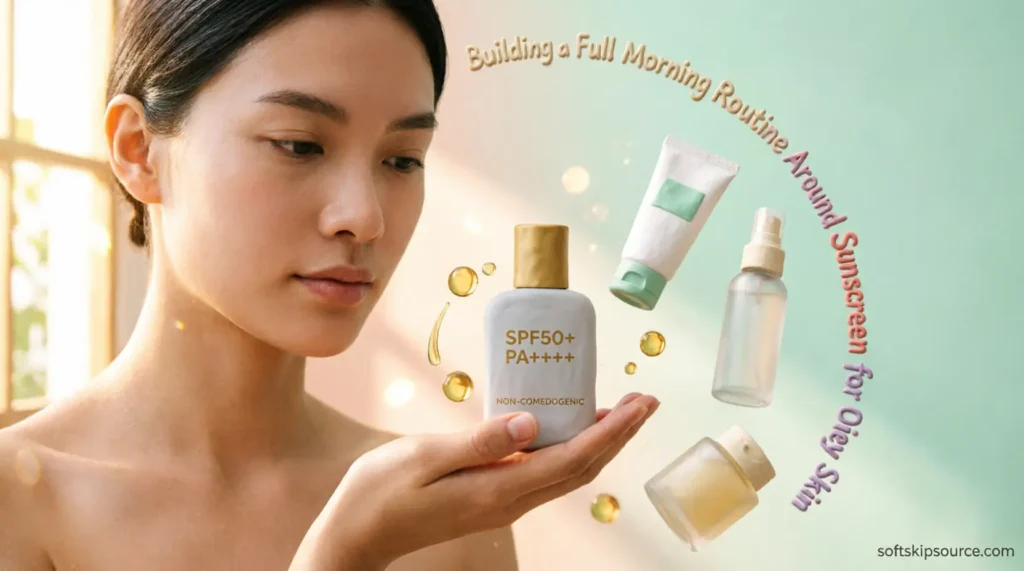
The order in which you apply products affects how well your sunscreen performs. Here is an effective morning routine specifically designed for oily skin:
- Step 1: Gentle, low-pH cleanser to remove overnight sebum without stripping the barrier
- Step 2: Lightweight toner or essence with niacinamide or centella asiatica for calming and oil regulation
- Step 3: Water-based gel moisturizer — thin layer only
- Step 4: Sunscreen — allow 1 to 2 minutes for the moisturizer to absorb first
- Step 5: If using makeup, allow sunscreen to settle for 10 to 15 minutes before applying
Avoid layering oil serums, heavy primers, or oil-based foundations directly over sunscreen if oiliness is a concern. The more product layers you add, the higher the chance of pilling and breakdown throughout the day.
Common Sunscreen Mistakes That Make Oily Skin Worse
- Applying sunscreen over a damp face — moisture prevents proper adhesion and causes uneven absorption
- Using the wrong amount — too little means inadequate protection, too much means excessive shine and possible pilling
- Not reapplying — SPF breaks down over time, especially when combined with sweat and sebum from oily skin
- Using an expired product — sunscreen’s active filters degrade past their expiration date and offer reduced protection
- Choosing fragrance-heavy formulas — fragrance is the most common skin irritant and will worsen reactive, acne-prone skin
- Skipping sunscreen on cloudy days — up to 80% of UV rays penetrate through cloud cover
Frequently Asked Questions
Is sunscreen necessary if my skin is naturally oily?
Yes. Oily skin has no natural protection from UV radiation. Sebum cannot block UVA or UVB rays. Oily skin tans, ages, and develops hyperpigmentation just like any other skin type, and the inflammation from acne makes it more vulnerable to sun damage, not less.
Can I skip moisturizer and just use sunscreen on oily skin?
Some multi-functional sunscreens contain hydrating ingredients that reduce the need for a separate moisturizer. However, using them separately is generally better practice since each serves a distinct function. If you want to simplify your routine, choose a sunscreen with hyaluronic acid or niacinamide built in.
Does sunscreen make oily skin look shinier?
Only the wrong sunscreen does. Lightweight gel formulas, silicone-based matte options, and mineral formulas with silica actually control oil and reduce shine rather than adding to it.
How do I know if a sunscreen is non-comedogenic?
Look for the term “non-comedogenic” on the label. Also check the ingredient list for known pore-blockers like coconut oil, lanolin, cocoa butter, and isopropyl myristate. Simpler, shorter ingredient lists tend to be safer for acne-prone skin.
Should I use mineral or chemical sunscreen for oily skin?
Both can work. Mineral sunscreens with zinc oxide are generally preferred for oily and acne-prone skin because of their anti-inflammatory properties and lower irritation risk. However, a well-formulated chemical sunscreen with a matte texture is an equally valid choice.
What SPF is best for oily skin daily use?
SPF 50 is the sweet spot for most people. It blocks approximately 98% of UVB rays, provides a better margin against sweat and oil degradation, and is strongly recommended by dermatologists for anyone dealing with acne scarring or post-inflammatory hyperpigmentation.
Why does my sunscreen pill over my moisturizer?
Pilling usually happens when products have not fully absorbed before the next layer is applied, or when silicone-heavy products are layered on top of each other. Allow each product to settle for at least one minute before the next, and avoid layering multiple silicone-based formulas.
Can I use the same sunscreen on my face and body if I have oily skin?
Body sunscreens are formulated for thicker, less sensitive skin and typically use heavier, richer bases that will clog facial pores. Always use a face-specific sunscreen for oily skin that is labeled non-comedogenic and designed for daily facial use.
Final Thoughts
Sunscreen is not optional when you have oily skin — it is genuinely one of the most important things you can do for your complexion long term. The relationship between UV damage and worsened oiliness, hyperpigmentation, and acne is well-documented. The good news is that the market for face sunscreen for oily skin has improved enormously. Lightweight gels, matte minerals, and hybrid formulas now exist that feel genuinely comfortable and that most oily skin types cannot even feel wearing.
Find a formula that matches your texture preference. Check for niacinamide or zinc oxide in the ingredient list. Apply it every morning, reapply when outdoors, and give your skin the protection it has always needed. That is the entire strategy — and it works.
