


Introduction
Redness-prone skin reacts faster and more intensely to environmental stress—especially sunlight. UV exposure doesn’t just tan the skin; it increases inflammation, weakens the skin barrier, and makes redness more persistent and visible.
This is why using a targeted sunscreen for redness prone skin is essential rather than optional. Regular sunscreens may protect against UV rays, but they often lack calming ingredients and can even trigger irritation.
A properly formulated sunscreen for sensitive skin helps to:
- Minimize redness and flare-ups
- Strengthen the skin’s natural barrier
- Protect against UVA and UVB damage
- Prevent long-term sensitivity and discoloration
Without daily SPF, redness-prone skin struggles to heal because it remains constantly exposed to triggers. That’s why dermatologists consider sunscreen the most important step in any routine for sensitive or reactive skin.
Mineral vs Chemical Sunscreen for Sensitive Skin
Choosing the right type of formula is crucial when picking a face sunscreen for sensitive skin, especially if your skin is prone to redness or irritation. Not all sunscreens behave the same way on reactive skin.
Mineral Sunscreen (Physical Filters)
Mineral sunscreens are widely considered the safest option for redness-prone skin. They use ingredients like zinc oxide and titanium dioxide to sit on top of the skin and reflect UV rays.
- Gentle and non-irritating
- Starts working immediately after application
- Naturally soothing, especially zinc oxide
- Ideal for rosacea and sensitive skin
Chemical Sunscreen
Chemical sunscreens absorb UV rays and convert them into heat before releasing them from the skin. While they feel lightweight and invisible, they can sometimes trigger sensitivity.
- Lightweight and easy to blend
- No white cast
- May cause stinging or redness in reactive skin
- Requires 15–20 minutes before sun exposure
Hybrid Sunscreen
Hybrid formulas combine both mineral and chemical filters to improve texture and performance.
- Better cosmetic finish than pure mineral
- Balanced protection
- May still irritate extremely sensitive skin
For most people dealing with redness, a mineral-based sunblock for sensitive skin remains the most reliable and skin-friendly choice.
Key Ingredients That Help Reduce Redness
When choosing the best sunscreen for sensitive skin, ingredients play a bigger role than branding or SPF number. The right formula doesn’t just protect—it actively calms irritation and supports healing.
Look For These Soothing Ingredients
- Zinc Oxide
A mineral UV filter that also has anti-inflammatory properties, making it ideal for calming redness and irritation. - Niacinamide
Helps reduce redness, improve uneven skin tone, and strengthen the skin barrier over time. - Centella Asiatica (Cica)
Known for its soothing and healing benefits, it helps calm inflamed or reactive skin. - Ceramides
Essential for repairing and maintaining a strong skin barrier, which reduces sensitivity. - Aloe Vera
Provides immediate cooling and calming effects, especially useful for irritated skin. - Bisabolol
A gentle anti-inflammatory ingredient that helps reduce visible redness and discomfort.
A well-formulated spf for sensitive skin combines UV protection with these calming ingredients, turning sunscreen into both a protective and treatment step in your routine.
Ingredients to Avoid in Redness-Prone Skin
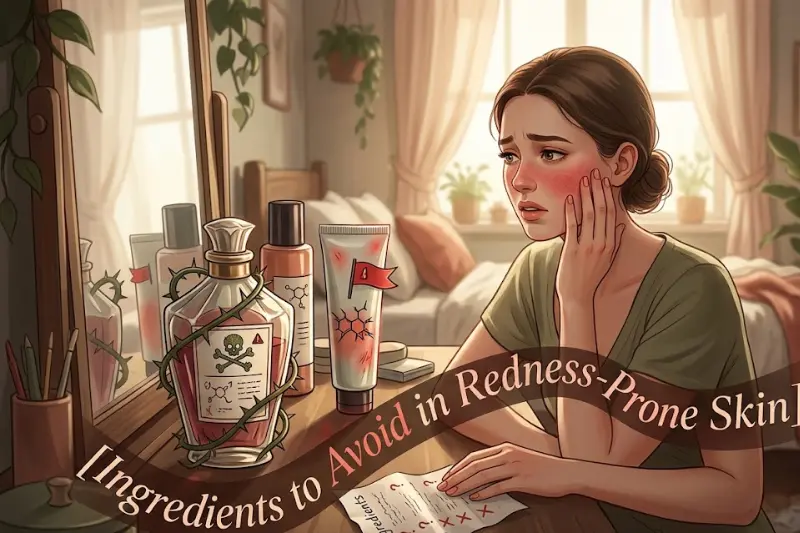
Even a high SPF won’t help if the formula itself is triggering irritation. For redness-prone skin, avoiding certain ingredients is just as important as choosing the right ones.
Avoid These Common Irritants
- Fragrance (Synthetic or Natural)
One of the most common causes of irritation and flare-ups in sensitive skin. - Alcohol-Based Formulas
Can dry out the skin and weaken the barrier, leading to more redness over time. - Oxybenzone and Octinoxate
Chemical UV filters that may cause stinging or allergic reactions in reactive skin types. - Essential Oils
Even natural oils like citrus or lavender can irritate sensitive skin. - Harsh Preservatives and Additives
Can disrupt the skin barrier and trigger inflammation.
Choosing a clean, minimal formula is key when selecting a sunscreen for sensitive skin. Fragrance-free, hypoallergenic options are always the safest route for maintaining calm and balanced skin.
Types of Sunscreen for Different Sensitive Skin Needs
Redness-prone skin isn’t one-size-fits-all. Choosing the right texture and formula can make a big difference in how your skin reacts throughout the day. The best sunscreen for redness prone skin should match both your sensitivity level and skin type.
For Daily Use
- Lightweight fluid or lotion formulas
- Fast-absorbing and breathable
- Works well under makeup
- Ideal as an everyday face sunscreen for sensitive skin
For Dry Sensitive Skin
- Cream-based sunscreen with rich hydration
- Contains ceramides and humectants
- Prevents tightness and flaking
For Oily or Acne-Prone Skin
- Oil-free and non-comedogenic formulas
- Gel or matte finish textures
- Helps control shine without clogging pores
For Visible Redness
- Tinted sunscreen with green or neutral undertones
- Helps instantly neutralize redness
- Evens out skin tone without heavy makeup
For Outdoor or Water Exposure
- Water-resistant formulas (40–80 minutes)
- Stronger protection against sweat and humidity
- Ideal for long sun exposure
Selecting the right type of sunblock for sensitive skin ensures not only protection but also comfort, helping your skin stay calm and balanced all day.
Comparison Table: Choosing the Right Sunscreen
| Feature | Mineral Sunscreen | Chemical Sunscreen | Hybrid Sunscreen |
|---|---|---|---|
| Skin Sensitivity | Very low irritation | Moderate irritation risk | Medium |
| Redness Support | Excellent | Limited | Good |
| Finish | Slight white cast possible | Invisible | Natural |
| Protection Start | Immediate | 15–20 minutes delay | Immediate + delayed |
| Texture | Slightly thicker | Lightweight | Balanced |
| Best For | Redness-prone, reactive skin | Normal to resistant skin | Combination skin |
| Risk of Irritation | Minimal | Higher | Moderate |
This comparison makes it easier to choose the right spf for sensitive skin based on how reactive your skin is. For most people dealing with redness, mineral sunscreens remain the safest and most effective option.
How to Use Sunscreen Without Triggering Redness
Even the best sunscreen for redness prone skin can cause irritation if applied incorrectly. Gentle application and proper layering make a big difference in how your skin reacts.
Step-by-Step Application
- Apply sunscreen as the last step of your skincare routine
- Use a gentle patting motion instead of rubbing
- Allow moisturizer to fully absorb before applying SPF
- Wait 10–15 minutes before sun exposure (especially for chemical formulas)
- Reapply every 2 hours when outdoors
Application Tips for Sensitive Skin
- Use a pea-sized amount for the face and build gradually
- Avoid over-layering multiple active skincare products underneath
- Let each layer settle to prevent pilling or irritation
- Choose a consistent product instead of switching frequently
Extra Care for Redness-Prone Skin
- Apply sunscreen on calm, well-moisturized skin
- Avoid applying on broken or highly irritated areas
- Use lukewarm water when cleansing before SPF
- Pair with protective measures like hats or shade
Using the right technique ensures your face sunscreen for sensitive skin works effectively without triggering unnecessary redness or discomfort.
Common Mistakes That Worsen Redness

Even when using a sunscreen for redness prone skin, certain habits can make irritation worse. Avoiding these mistakes is just as important as choosing the right product.
Skipping Sunscreen on Cloudy Days
UV rays penetrate clouds, so skipping SPF can still trigger redness and inflammation.
Not Reapplying Sunscreen
One application isn’t enough. Without reapplication, protection fades and skin becomes vulnerable again.
Using Fragranced or Harsh Formulas
Even high-end sunscreens can irritate if they contain fragrance, alcohol, or strong additives.
Applying Too Little Product
Under-applying reduces protection, allowing UV exposure to worsen redness.
Layering Too Many Active Ingredients
Using strong actives like acids or retinoids under SPF can increase sensitivity and irritation.
Switching Products Too Frequently
Constantly changing products doesn’t allow your skin to adjust, increasing the risk of reactions.
Ignoring Skin Type
Using heavy creams on oily skin or drying formulas on dry skin can trigger imbalance and redness.
Consistency and simplicity are key. A gentle, well-matched sunscreen for sensitive skin used correctly will always perform better than constantly trying new products.
Who Should Use Sunscreen for Redness-Prone Skin
A targeted sunscreen for redness prone skin isn’t just for one specific condition—it’s essential for anyone whose skin reacts easily to environmental or product-related triggers.
You Should Use It If You Experience
- Frequent facial redness or flushing
- Burning or stinging after applying skincare
- Visible capillaries or uneven skin tone
- Dry, irritated, or easily inflamed skin
Skin Conditions That Benefit Most
- Rosacea-prone skin
- Acne-prone sensitive skin
- Post-treatment skin (after peels, lasers, or exfoliation)
- Barrier-damaged or over-exfoliated skin
Lifestyle Factors That Increase Need
- Daily sun exposure
- Hot or humid climates
- Outdoor activities or sports
- Pollution exposure
Using a dedicated face sunscreen for sensitive skin helps protect against daily triggers while keeping the skin calm, balanced, and less reactive over time.
FAQs
What is the best sunscreen for redness prone skin?
The best option is a mineral-based sunscreen for redness prone skin with zinc oxide, as it protects while calming irritation and reducing inflammation.
Can sunscreen reduce redness?
Yes, especially formulas with soothing ingredients like niacinamide, centella asiatica, and ceramides. These help calm the skin while preventing UV-triggered redness.
Is SPF 50 better for sensitive skin?
SPF 30 to 50 is ideal. Higher SPF offers slightly more protection, but proper application and reapplication matter more than the number alone.
Should I use tinted sunscreen for redness?
Tinted formulas are a great choice because they help neutralize visible redness and even out skin tone instantly.
Why does sunscreen irritate my skin?
Irritation is usually caused by chemical filters, fragrance, or alcohol. Switching to a gentle sunscreen for sensitive skin often resolves this issue.
How often should I reapply sunscreen?
Every 2 hours when outdoors, and immediately after sweating or washing your face.
Conclusion
Choosing the right sunscreen for redness prone skin is essential for keeping irritation under control and maintaining a healthy skin barrier. The ideal formula should not only protect against UV damage but also include calming, skin-friendly ingredients that reduce sensitivity over time.
Mineral-based options remain the safest and most effective choice, especially when paired with soothing ingredients like niacinamide and centella asiatica. Avoiding harsh additives and sticking to a consistent routine can make a noticeable difference in how your skin looks and feels.
When selecting the best sunscreen for sensitive skin, focus on gentle formulations, proper application, and daily use. With the right approach, sunscreen becomes more than protection—it becomes a key step in achieving calmer, clearer, and more balanced skin.
You May Also Like :
Hailey Bieber Skincare Routine: Glazed Donut Skin Secrets
Best Sunscreen for Dry Skin – Hydrating SPF Picks
Sunscreen for Acne Prone Skin – Dermatologist Approved
Best Mineral Sunscreen for Face – Lightweight And No White Cast
